
The L.A. County Metropolitan Transportation Authority board last week approved a modified route for the Sepulveda Transit Corridor subway project – aimed at linking the San Fernando Valley and L.A.’s Westside.
The plan for the subway line – which could cost up to $24 billion – promises commuters a travel time of 18 minutes or less.
The 13-mile route – which spans from the Van Nuys Metrolink station on the north to the Sepulveda Boulevard E (Expo) Line station on the south – would stop in between at the G (Orange) Line, Ventura Boulevard, UCLA, the Metro D (Purple) Line at Wilshire Boulevard and Santa Monica Boulevard.
“Connecting the San Fernando Valley and West Los Angeles…means opening doors to better jobs, classrooms, entertainment centers and more,” said Fernando Dutra, Metro board chair and Whittier city councilmember, in a statement earlier this month. “It means cleaner air and less time stuck in traffic.”
Contrary to the project’s name, the southern tip of the route for this proposal is the only one on Sepulveda. Most of the route would run up to 2 miles east under Beverly Glen Boulevard, through the Santa Monica Mountains and then to Van Nuys Boulevard.
While the project cost has not been finalized, one of the proposals upon which it is based was pegged at just over $24 billion. But with only about $3.5 billion currently designated for the project, Metro will need to seek at least $20 billion from public and private sources.
In its planning documents, Metro has 2035 as its target completion date. However, with so little funding on hand and little prospect of funding from the federal government in the near term, that date is optimistic – to say the least.
Slate of options
The plan to tunnel through the Santa Monica Mountains has been on the drawing boards for decades. Metro tried a novel approach in 2019 in developing the so-called Sepulveda Transit Corridor: instead of working on the project internally, the agency sought outside proposals.
Two private-sector consortia submitted options.
One consortium put forward a plan for monorail tracks – mostly above the median of the 405 Freeway – as the most affordable option that largely stayed within the Sepulveda Pass.
Sepulveda Transit Corridor Partners – another consortium including Reston, Virginia-based construction and engineering giant Bechtel, Paris-based infrastructure finance company Meridiam and Munich, Germany-based technology and infrastructure conglomerate Siemens – offered two subway options. One concept called for an elevated northern segment along Sepulveda; and the other was entirely underground along a route slightly east of the 405 through the Sepulveda Pass and then under Sepulveda.
Metro staff – in collaboration with engineering firms HNTB Corp. (Kansas City), AECOM (Dallas) and the Culver City environmental consulting firm Terry A. Hayes Associates – put forward another option.
The route would travel totally underground with two tunnels heading north from UCLA under Beverly Glen and Van Nuys Boulevards.
In its review of the proposals, Metro staff quickly set aside the monorail options as either too slow – taking up to 30 minutes – or having ridership projections that were too low. Metro also cast aside the subway option including the elevated rail along Sepulveda, amid intense opposition from the Sherman Oaks Homeowners Association and other local groups.
Modified proposal emerges
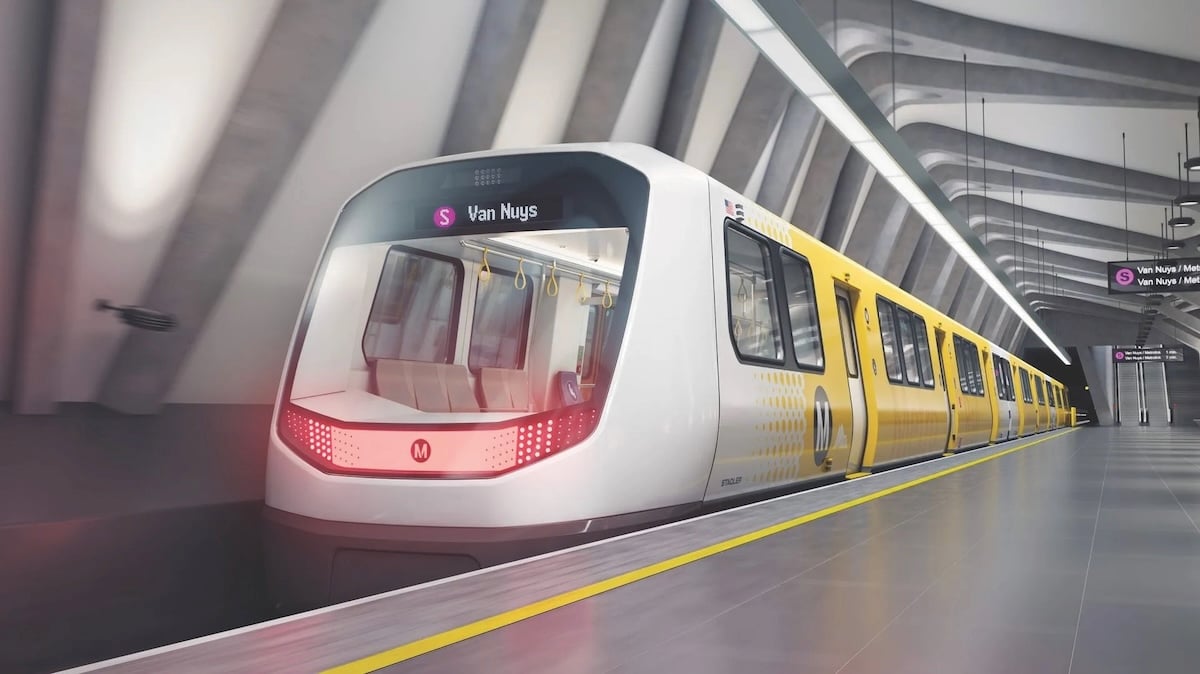
The recommendation that the Metro board ultimately approved was a combination of elements. The staff merged their own proposal with the total underground concept – known as Alternative 5 – put forth by Sepulveda Transit Corridor Partners.
This combination, which Metro staff has dubbed “Modified Alternative 5,” has the single-tunnel approach of Sepulveda Transit Corridor Partners, but a more direct, shorter route under Beverly Glen and Van Nuys Boulevards.
In its report to the board, Metro staff said this modified subway route is the shortest one with the highest ridership potential. It also connects key employment centers in Sherman Oaks and Westwood.
In approving this modified option, the Metro board added an amendment directing staff to study options for a transit connection to the Getty Center in the Sepulveda Pass.
In a separate action for a light rail extension of the Metro C Line into the South Bay, the Metro board voted to scrap the initial preferred option of using a rail right of way Metro had previously purchased. Instead, the board voted for a more expensive option calling for an elevated rail line in the median of Hawthorne Boulevard.