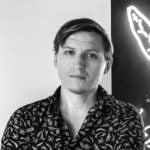
Emergency physician Dr. Armand Dorian is chief executive of USC Verdugo Hills Hospital in Glendale, which he first joined in 2003. He accepted the top job in 2021. Prior to that, the Valley-native lent his medical expertise to a variety of on- and off-screen roles in medical TV programs such as “ER” and “Deadliest Warrior.” Dorian shared his perspective on running a hospital with the Business Journal over a Power Lunch at El Morfi Grill, an Argentinian restaurant in downtown Glendale.
Tell me about running a community hospital in a region with so many different medical centers.
Community hospitals have a very important place in health care, because if you look at the greatest advancements in medicine, one would try to point to things like antibiotics or vaccines or MRIs, but the true game changer in health care comes with the time of delivery of care. It was the establishment of ambulances to pick you up. Before, you’d have to go to some doctor’s house, find them, walk over there. Then they had ambulances, and then they had emergency departments. The closer you can create that delta of time when you’re sick and when you get the care is where the real magic happens. Things like strokes, heart attacks, the quicker you get care, the quicker you get better. It’s like weeds: you want to pull it out right away. If you leave it festering, then you run into a lot of problems. Bringing the technology, the doctors and the expertise closer to home is the goal of all community hospitals.
A lot of hospitals in Southern California continue to see negative operating margins. What’s driving that?
Once you’re sick, you only have one dream, one wish: to get better. Everything else gets eliminated. Unfortunately, when it comes to the business of health, people maybe inappropriately lean on the good graces of health care providers – hospitals, doctors, nurses, caregivers – and squeeze them year over year in their reimbursements. It gets to a point where it’s just untenable, knowing that providers will still take care of the patient regardless of whether they can pay or not. Unfortunately, where we’re at right now, this third payer model of somebody deciding how much to pay is creating a lot of struggles for you and I and everybody else who’s trying to access health care.
What’s a possible remedy?
The problem is huge, so it’s got to be one bite at a time. The payers are not bad people. They have a job to do. They have a responsibility to their shareholders, and so everybody’s doing the right thing in their environment, in their work constraints, but they’re all in silos. The common good still is supposed to be, “Let’s get this person better, and how do we get that person better in the most efficient way?” We have to break down those barriers and have much better communication. In the end, we want everybody to have a win-win-win situation, but without that communication, it’s not going to happen. People start saying really revolutionary things, like “single payer” and that’s too big of a leap to get to. Even though people knock our health care system, people still fly from all over the world to come and get care in the United States, because, truthfully, we are delivering amazing care.
Your hospital is among those that have closed maternity wards, for need-based reasons. Do you see more consolidation of specialties happening?
The key is going back to your core mission statement. If our community, 52 years ago when the hospital was founded, had a lot of young couples having babies, then our job is to satisfy that need. It would be a disservice, as the CEO of the hospital, if I don’t see the evolving nature of my community and not prioritize their major requests or issues. My community is no longer a young community that’s having babies. It’s not that we shut down labor and delivery because we’re “losing money.” There are just no babies being born. Instead, we have a tremendous need for prostate cancer, breast cancer. Those types of services need to be delivered and in a footprint that is limited because we’re on the side of the mountain. You really want to model your health care delivery system to be able to address the needs of your community and the overall demand.
Tell me about consulting on “Deadliest Warrior” and other TV programs.
Part of my life, which I didn’t know was going to develop, was work in media, and it started kind of by accident. I would get a bunch of spam emails asking for medical stories. One day, I had a really sad case, and so I responded to an email. The producer called me crying (and) saying, “This is the saddest story. We can’t put that on TV. Do you have anything funny?” That was the beginning of a show called “Untold Stories of the E.R.,” which was on the Learning Channel. That led to relationships. Those relationships went to many different other shows, but the important one was the show “ER.” And then one of my friends who worked on “Untold Stories” called me up and said, “Hey, I have this medical show; it’s in Simi Valley, in this warehouse.” I pull up and I see this guy without a shirt on with a sword walking past me – I’m like, What medical show is this?” That was my introduction to “Deadliest Warrior,” where they used me as the trauma expert. That show became a monster – the No. 1 show on Spike, three video games, a movie deal. I was speaking at Comic Con to thousands of people. If it wasn’t for a legal issue that occurred between the network and the original creator, my career may have continued down that path. It was one of the most fun things I got to do.
What do you like about living and working in the Valley?
I would always say to my friends, “All roads lead to the Valley.” I was born and raised in the San Fernando Valley. I went to UCLA for undergrad, so I made a little bit of a hop over the hill, and then I left for Hawaii for five years. But then I settled in Porter Ranch. I feel like the Valley has done amazing things. For me, it’s provided all of the aspects I feel like would be great for a family, as well as just my own maturation, where it’s just enough of the city, just enough of suburbia, and it provides for an amazing location and weather.